I’m a PhD student in Applied Physics at Stanford University, advised by Amir Safavi-Naeini in the Laboratory for Nanoscale Integrated Quantum Systems. At Stanford I’ve focused on making advanced chip-scale coherent light sources that enable applications in portable spectroscopy and sensing. I interned with Apple’s Exploratory Design Group (XDG) on integrated biophotonic systems. I’m funded by the NSF GRFP, NTT Research Fellowship, and Stanford Doerr School of Sustainability Accelerator.

Previously, I was a Churchill Scholar and MPhil student at the NanoPhotonics Centre (Cambridge), supervised by Jeremy Baumberg. Before that, I studied physics and EE at Rice University, where I worked with Guru Naik. I spent undergrad research internships working with Ming Wu (Berkeley, Energy-Efficient Electronics REU), Kazunari Matsuda/Yuhei Miyauchi (Kyoto, Nakatani RIES REU), and Nima Aghaeepour (Stanford).

Outside of lab, I love playing chamber music (viola), backpacking, and pickup basketball.

Project highlights
  • Chip-based mid-infrared OPO sources
    Chip-based mid-infrared OPO sources

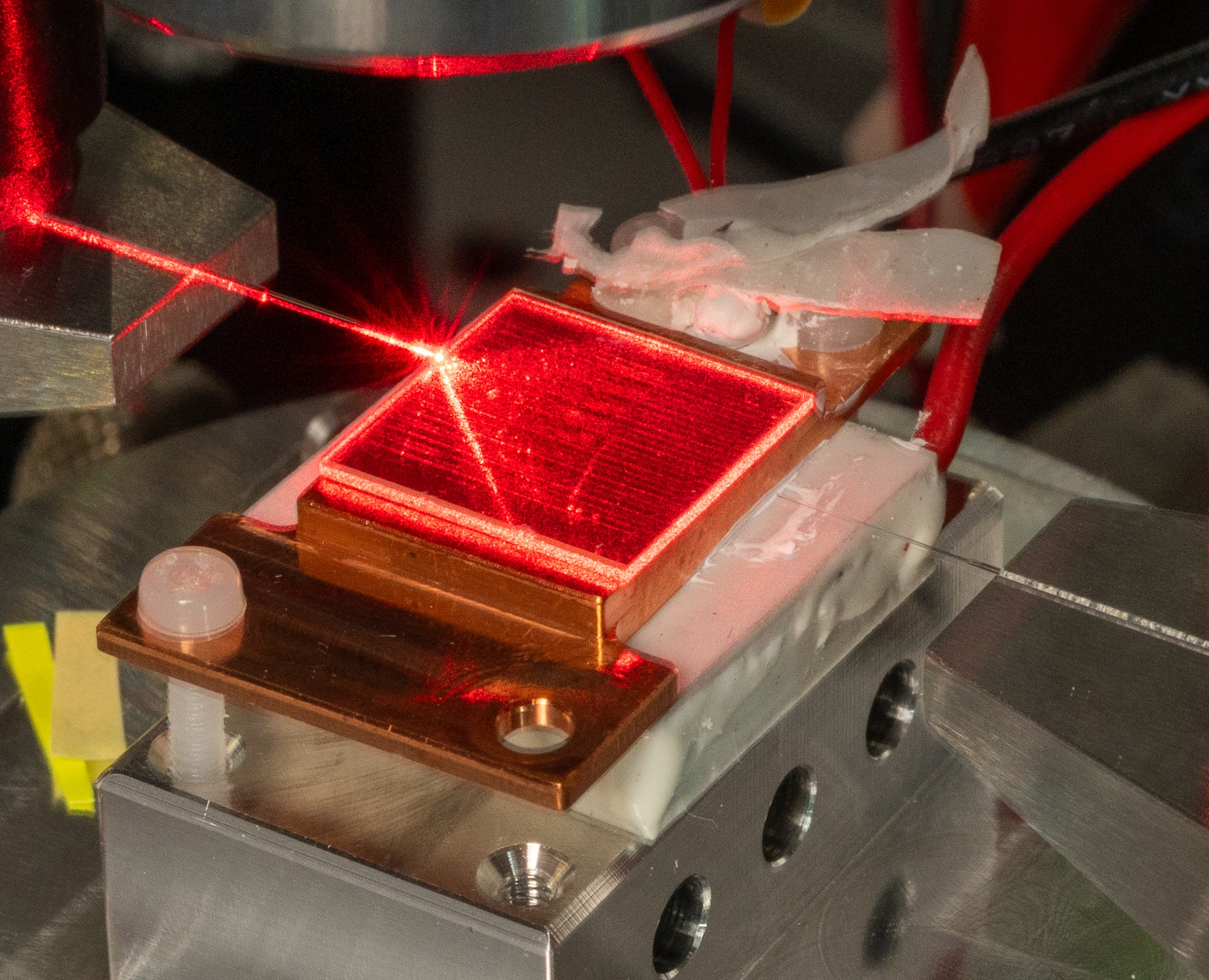
    Optical parametric oscillators (OPOs) are the most tunable and broadband type of laser source existing today. They’re remarkably efficient at converting an input laser’s wavelength in a flexible manner. My work has focused on integrating these devices onto photonic chips and designing them to produce bright, broadband mid-infrared radiation.

    Why mid-infrared? Because (1) molecules are extremely sensitive to mid-infrared light, making lasers here useful for sensing, but (2) good mid-infrared lasers are very challenging to produce and not easy to come by.

    Demonstrating an integrated octave-spanning mid-infrared OPO and using it for methane spectroscopy: Optica, 10, 1535 (2023) / arXiv:2307.04199. The main reason this is significant: in an OPO, generating emission and controlling the emission are two completely different stories. OPOs can be notoriously tricky to operate because they involve multiple waves, resonances, high powers, and nonlinearity. By engineering the architecture properly (in what’s referred to as a “singly-resonant” cavity), we are able to control the emission well enough to tune over narrow gas lines. Actually doing the tuning wasn’t too hard — the most difficult part was calibrating the wavelength axis of the narrow gas peak precisely enough without a mid-infrared wavemeter!

    Realizing a broadband electrically-tunable integrated OPO: arXiv:2604.06673. Though integrated OPOs can tune over remarkably broad ranges, typically this requires a widely-tunable pump, large temperature control (many ten of Celsius), and/or multiple devices interfaced on a chip, which limits the benefits of chip integration. Here, we realized broad tunability completely through on-chip electrical controls by learning from the successful architectures of near-infrared tunable lasers. This means our device can tune over tens of THz in the mid-infrared with a completely fixed-wavelength 1-μm pump, which is really exciting for applications demanding low-cost, scalable, and compact systems featuring integrated OPOs.

    More exciting results coming soon :)

  • Greenhouse gas sensing with integrated sources
    Greenhouse gas sensing with integrated sources

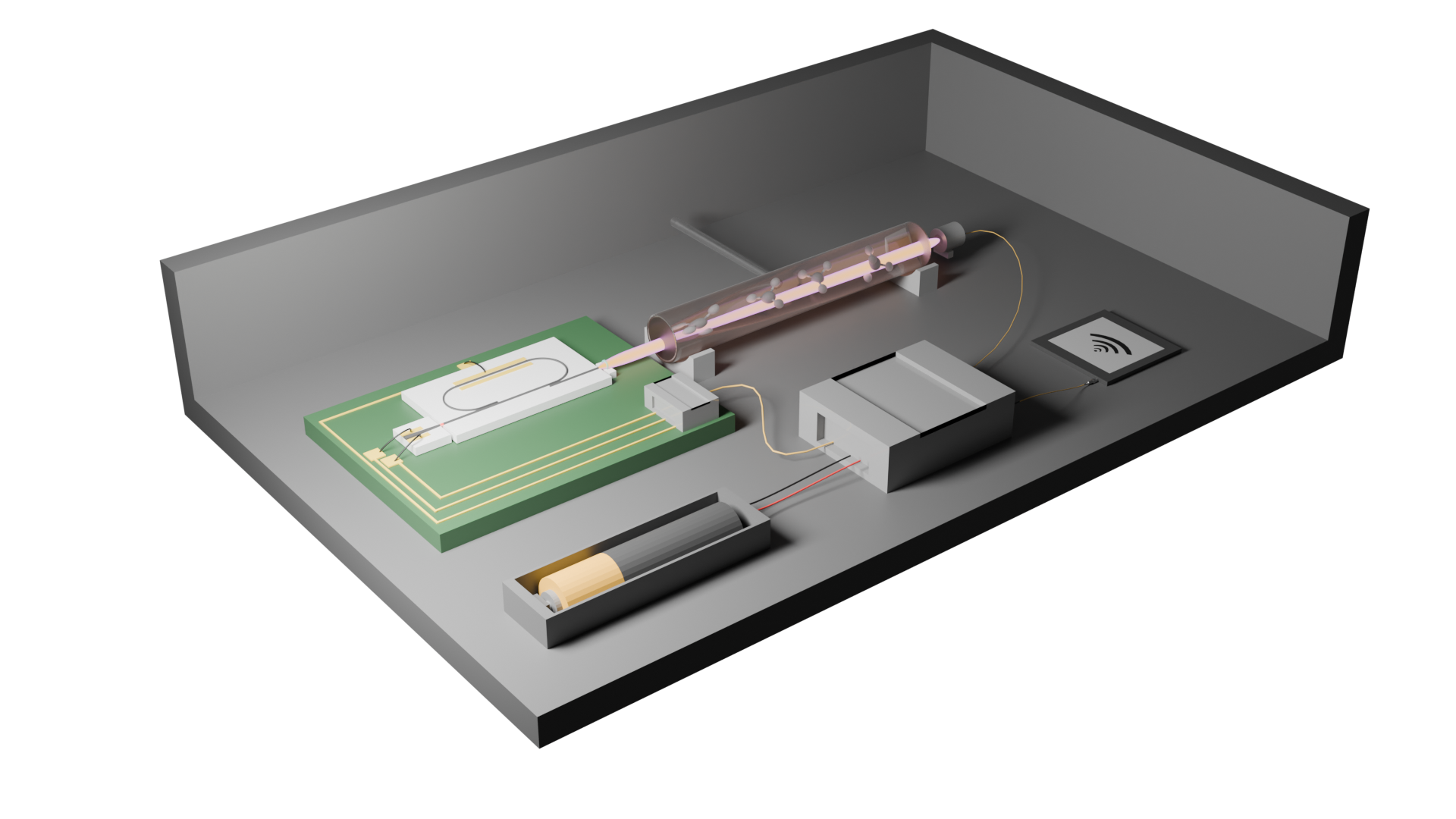
    I have led work with Stanford’s Doerr School of Sustainability Accelerator to utilize emerging integrated nonlinear photonic devices in greenhouse gas sensing applications. Most of our devices have operated in the 2.5-4 um range, where methane, nitrous oxide, water vapor, and carbon dioxide all have strong features.

  • Complex and automated photonic measurements
    Complex and automated photonic measurements

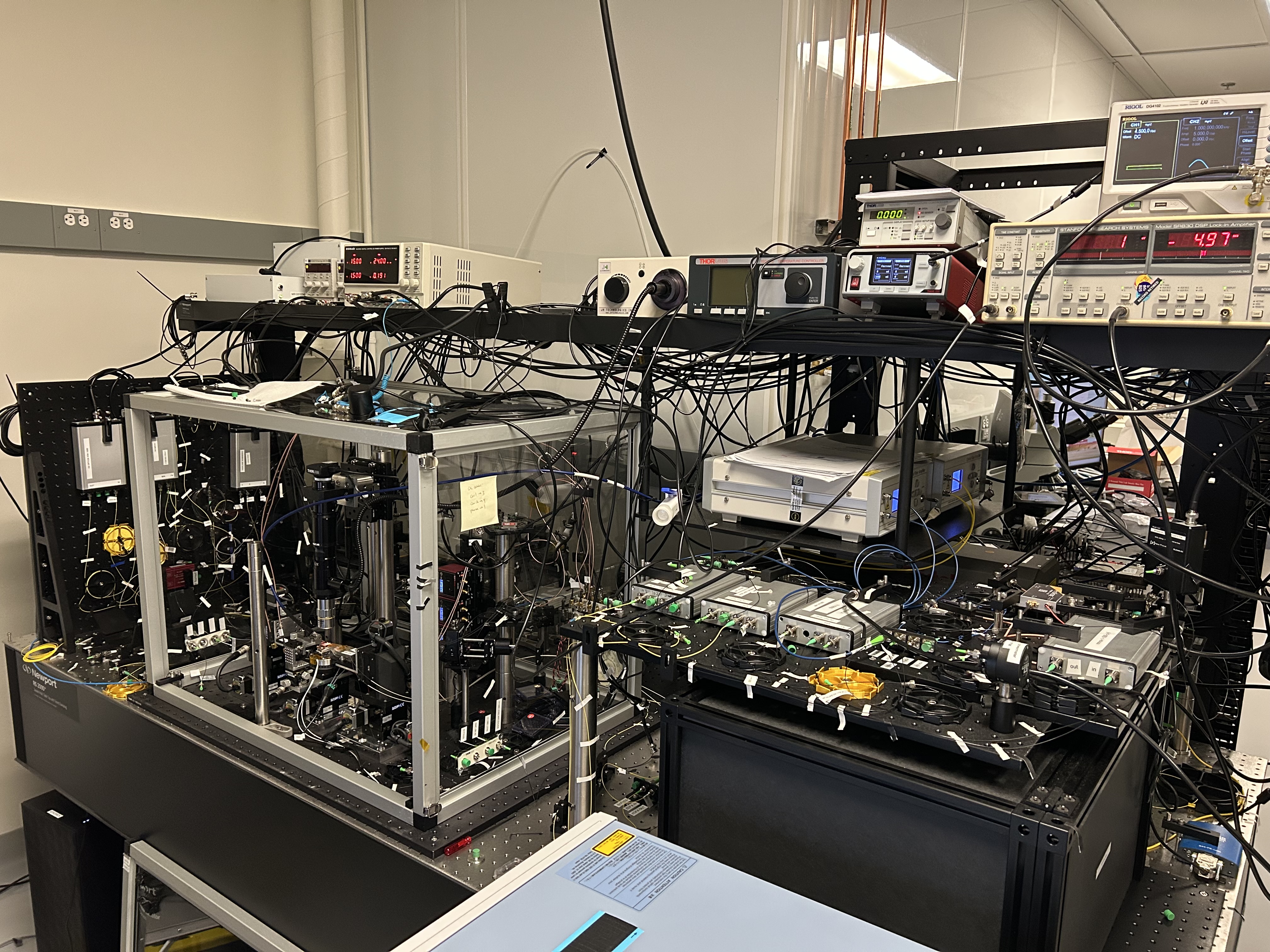
    The measurement setup I built includes lasers, mechanical stages, modulators, fiber optics, free space optics, analog/RF electronics, all programmatically interfaced through the PC.

  • Apple Exploratory Design
    Apple Exploratory Design

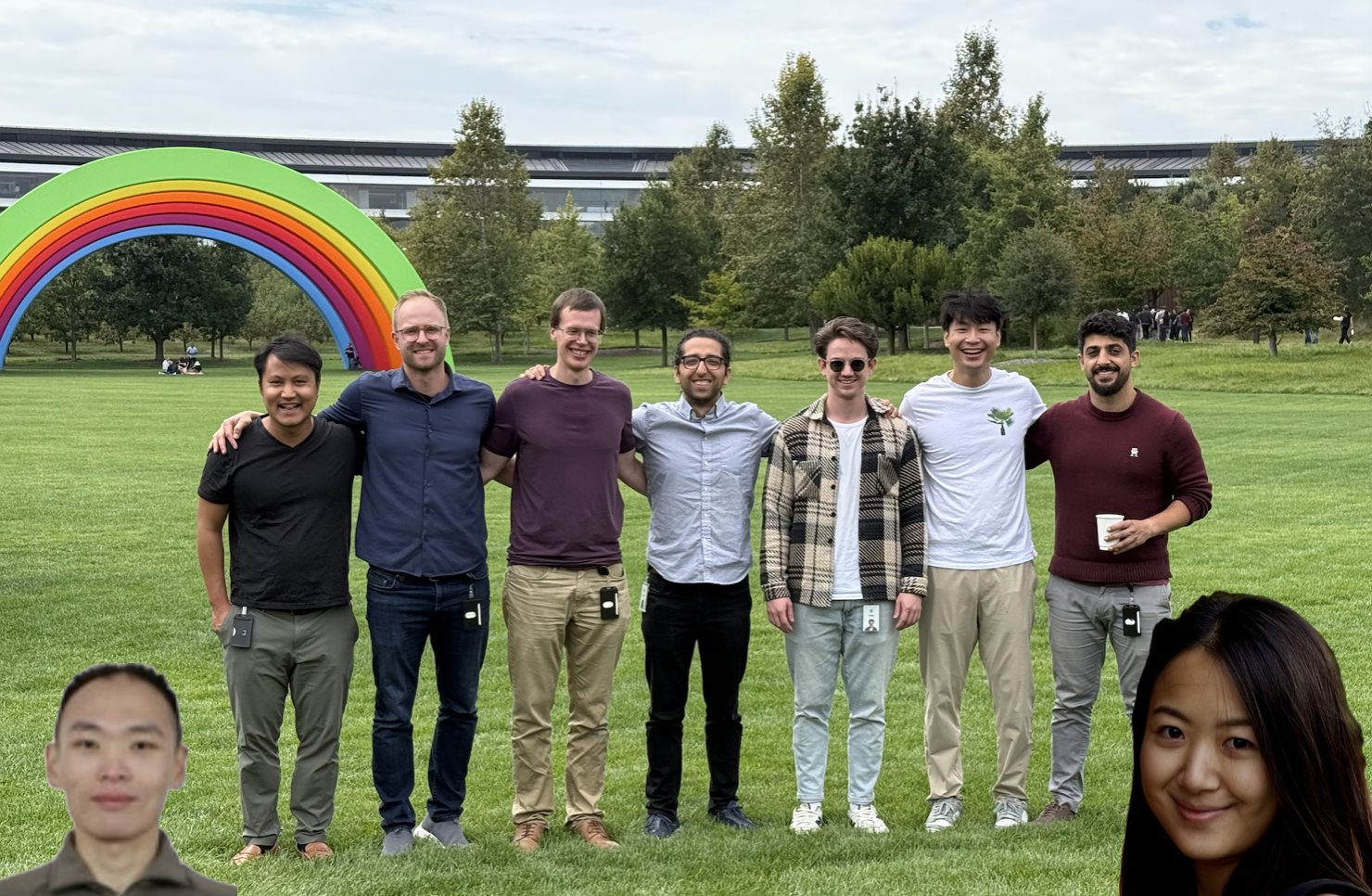
    In XDG, I worked in the Biophotonics Silicon System Integration Team. I had an exciting intern project and was given a lot of responsibility and freedom to investigate and prototype a solution for a fundamental system challenge the team was facing. Two great and slightly unexpected outcomes: (1) my software skills got a lot better (Python, developing code in big repos) and (2) I got a lot of practice working cross-functionally across multiple teams in a big org, which is quite different than working in the PhD.

  • Raman spectroscopy of nanoscale confined water
    Raman spectroscopy of nanoscale confined water

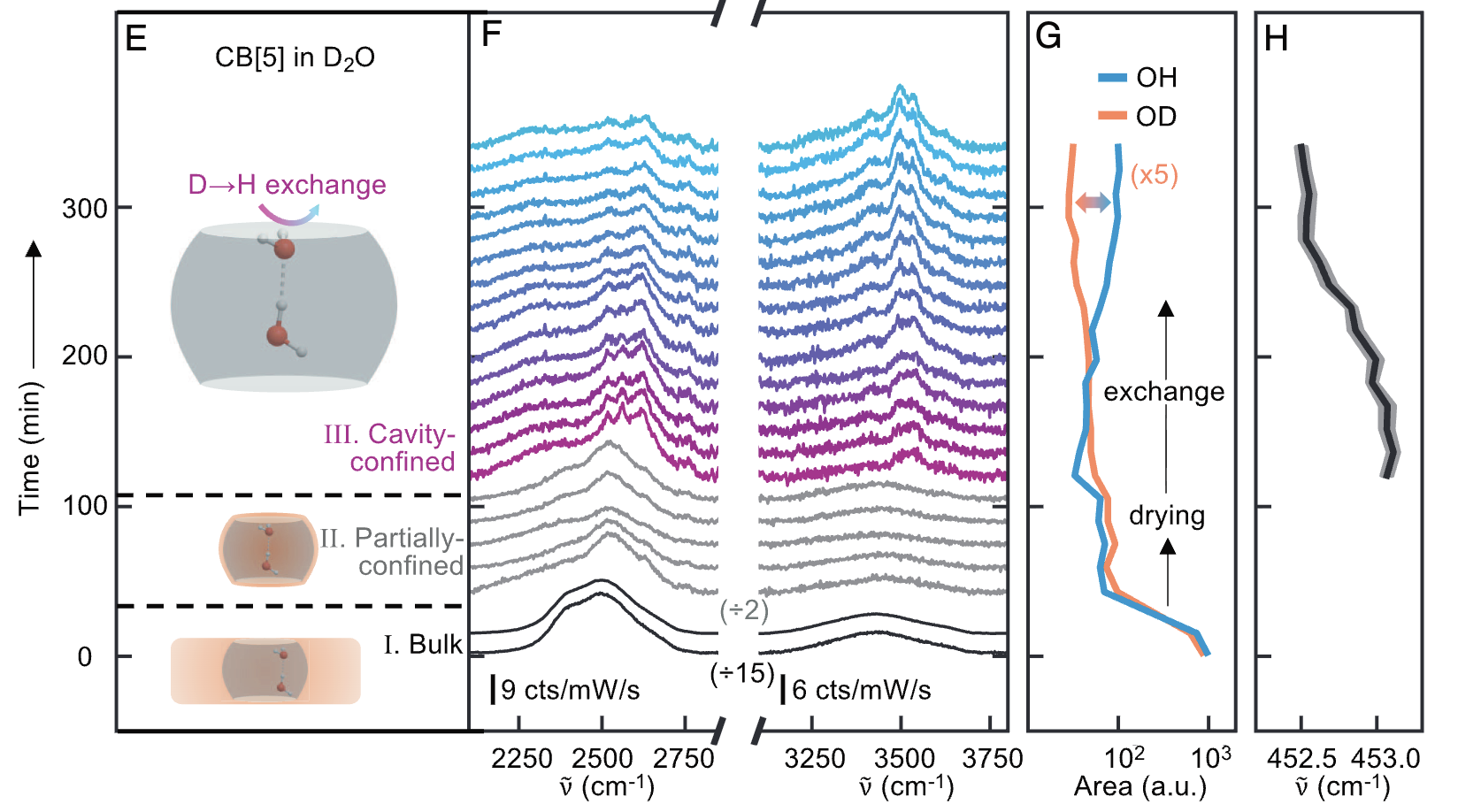
    Measuring small clusters of water is important for fundamental studies of the hydrogen bond, which plays a crucial role in countless areas of science and engineering. But typically such measurements are taken in cold systems. Here we discovered that the supramolecular structure cucurbituril naturally traps water dimers at room temperature, giving us a “playground” into hydrogen bond physics within an accessible structure. We verify this by using Raman spectroscopy to measure the various bonds of the two water molecules “dancing” around. PNAS, 119, 49 (2022)

  • Other collaborations

    At LINQS I’ve participated in a number of fruitful collaborations as a supporting member.

    • Efficient frequency-modulated integrated combs: Nature, 627, 95 (2024). I contributed to the initial chip design and fabrication.
    • Gain-trapped solitons: Optica, 11, 315 (2024). I led the fabrication, and participated in theoretical modeling, chip design, and measurements.
    • Ultrabroadband chip-based mid-infrared source: Optics Express, 30, 32752 (2022). I led the fabrication, and contributed to the chip design.
    • Three-octave chip-based UV-to-MIR supercontinuum: Optics Express, 32, 12004 (2024). I led the fabrication, and contributed to the chip design.
    • Several others that I don’t have space to list here! See my Google Scholar page.
Latest posts
See all posts